Emergence of Suicide from Ideation to Action among Medical Students: A Qualitative Study
Keywords:
Suicide, Suicidal Ideation, Medical Students, Mental Health, Risk Factors, Protective Factors, Social SupportAbstract
Objective: This study aimed to explore the risk and protective factors involved in the emergence and progression of suicidal thoughts toward suicidal behavior among medical students.
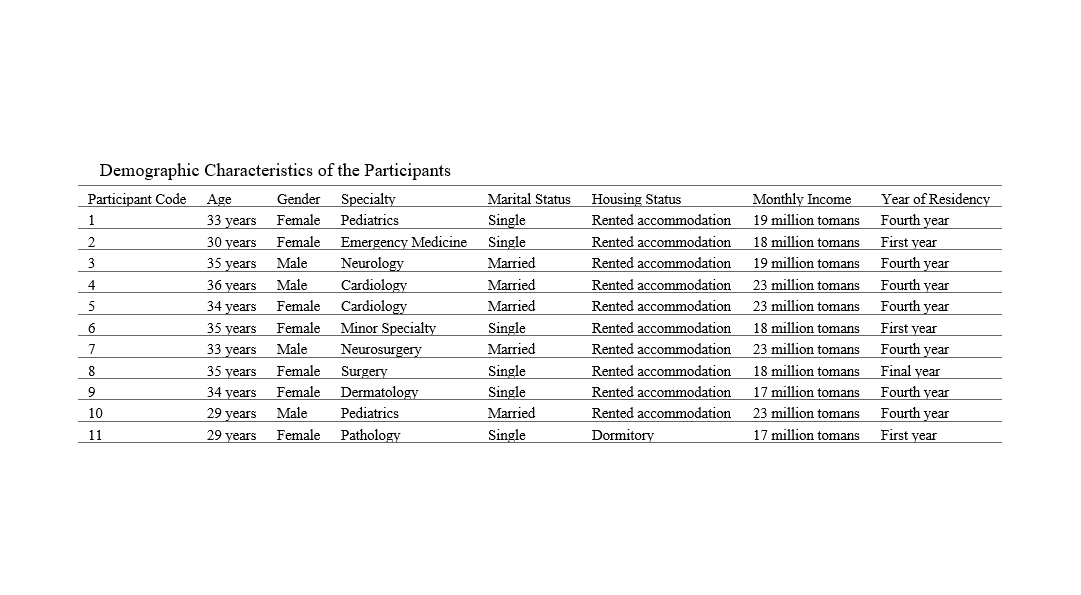
Methods and Materials: This qualitative study was conducted using an inductive qualitative content analysis approach. Data were collected through semi-structured interviews with medical interns and residents enrolled at universities of medical sciences in Tehran, Iran, during 2025. Participants were recruited using purposive and snowball sampling to ensure access to individuals capable of providing rich and relevant experiences regarding the phenomenon under investigation. Sampling and interviewing continued until theoretical saturation was achieved, resulting in 11 completed interviews. The interviews were analyzed using inductive qualitative content analysis through a systematic process of coding, categorization, comparison, and abstraction. MAXQDA software was used to facilitate systematic data management, coding, retrieval, and organization throughout the analytical process.
Findings: The analysis indicated that the emergence of suicidal ideation and its potential progression toward suicidal action among medical students resulted from an interaction between multiple occupational, educational, interpersonal, and psychosocial factors. Occupational and academic pressures, problematic workplace relationships, stress arising from professional responsibilities, and perceived social pressures emerged as major risk factors that intensified psychological distress and vulnerability to suicidal thoughts. Conversely, social and emotional support functioned as important protective mechanisms by reducing psychological strain, strengthening coping capacity, and potentially interrupting the progression from suicidal ideation toward suicidal behavior. The findings therefore suggest that suicidality among medical students develops through a multidimensional and dynamic process rather than as a consequence of a single isolated factor.
Conclusion: Suicidal ideation and its progression toward action among medical students appear to be shaped by the cumulative interaction of academic, occupational, interpersonal, and social stressors, while supportive social and emotional relationships may provide an important protective buffer.
Downloads
References
Al-Mamun, F., Hasan, M. E., Roy, N., Almerab, M. M., & Mamun, M. A. (2025). Suicidal behaviors among high school graduates with preexisting mental health problems: A machine learning and GIS-based study. International Journal of Social Psychiatry, 71(1), 65-77. https://doi.org/10.1177/00207640241279004
Asadi, H., Hoseini Razi, S., & Jalili, P. (2013). Prediction of university students' suicide based on religious beliefs, social support, coping strategies and general health. Journal of Applied Psychology, 6(4), 87. https://www.magiran.com/p1104736
Desai, N. D., Chavda, P., & Shah, S. (2021). Prevalence and predictors of suicide ideation among undergraduate medical students from a medical college of Western India. Medical Journal Armed Forces India, 77, S107-S114. https://doi.org/10.1016/j.mjafi.2020.11.018
Dutheil, F., Aubert, C., Pereira, B., Dambrun, M., Moustafa, F., & Mermillod, M. (2019). Suicide among physicians and health-care workers: A systematic review and meta-analysis. PLoS One, 14(12), e0226361. https://doi.org/10.1371/journal.pone.0226361
Ishikawa, M. (2022). Relationships between overwork, burnout and suicidal ideation among resident physicians in hospitals in Japan with medical residency programmes: A nationwide questionnaire-based survey. BMJ open, 12(3), e056283. https://doi.org/10.1136/bmjopen-2021-056283
Kazemi Rezaei, A., Ramezan Saatchi, L., Rahimi, M., & Moradi, S. (2023). Predictors of suicidal behavior with emphasis on protective factors and risk factors among prisoners. Iranian Journal of Psychiatric Nursing, 11(3), 1-13.
Mata, D. A., Ramos, M. A., Bansal, N., Khan, R., Guille, C., & Di Angelantonio, E. (2015). Prevalence of depression and depressive symptoms among resident physicians: A systematic review and meta-analysis. JAMA, 314, 2373. https://doi.org/10.1001/jama.2015.15845
Mateen, A., Kumar, V., Singh, A. K., Yadav, B., Mahto, M., & Mahato, S. (2024). Suicide and suicidal ideation in medical students: A systematic review. Cureus, 16(7), e65246. https://doi.org/10.7759/cureus.65246
Mohammadinia, N., Rezaei, M., Sameizadehtoosi, T., & Darban, F. (2012). Assessing suicidal ideation frequency in medical students. Quarterly Journal of Nursing Management, 1(1), 83-91.
Nasirzadeh, M., Hafezi Bakhtiari, M., Hasanzadeh, M., Hasani Ashjerdi, N., & Rezaeian, M. (2025). Investigating the suicidal thoughts and their correlation with life skills and perceived social support in students of Rafsanjan University of Medical Sciences in the 2024-2025 academic year: A descriptive study. Journal of Rafsanjan University of Medical Sciences, 24(7), 643-658. https://doi.org/10.61882/jrums.24.7.643
Riera-Serra, P., Navarra-Ventura, G., & Castro, A. (2024). Clinical predictors of suicidal ideation, suicide attempts and suicide death in depressive disorder: A systematic review and meta-analysis. European Archives of Psychiatry and Clinical Neuroscience, 274, 1543-1563. https://doi.org/10.1007/s00406-023-01716-5
Sadiq, M. S., Morshed, N. M., Rahman, W., Chowdhury, N. F., Yasir Arafat, S. M., & Mullick, M. S. I. (2019). Depression, anxiety, stress among postgraduate medical residents: A cross-sectional observation in Bangladesh. Iranian Journal of Psychiatry, 14, 141. https://doi.org/10.18502/ijps.v14i3.1320
Saeed, F., Shoib, S., & Tajik Esmaeeli, S. (2021). Physician suicide during the COVID-19 pandemic in Iran. Dusunen Adam: The Journal of Psychiatry and Neurological Sciences, 34, 313-314.
Stupar-Rutenfrans, S., Fokke, A., Bye, S., Padilla, E., Kalibatseva, Z., Batkhina, A., Ryabichenko, T., Bushina, E., Varaeva, N., & Helmy, M. (2024). Subjective well-being: A pilot study on the importance of emotion regulation, gender identity and sexuality. Psychology & Sexuality, 1-16. https://doi.org/10.1080/19419899.2024.2325973
Thomas, K. R., & Reddy, B. V. (2023). A study on measure of resilience and impact of demanding clinical training on young medical professional's burnout in a tertiary care hospital, Andhra Pradesh. Journal of education and health promotion, 12(1), 390. https://doi.org/10.4103/jehp.jehp_321_23
Downloads
Additional Files
Publication Timeline
- Submitted
- Revised
- Accepted