Phenomenological Consequences of Girls Witnessing Parental Infidelity
DOI:
https://doi.org/10.61838/kman.jayps.4440Keywords:
Parental infidelity, adolescent girls, phenomenology, grounded theory, trust, psychological damages, resilienceAbstract
Objective: The objective of this study was to explore and determine the phenomenological consequences experienced by adolescent girls who have witnessed parental infidelity.
Methods and Materials: This qualitative study employed a grounded theory approach to capture the lived experiences of adolescent girls aged 14–20 years who had directly or indirectly observed parental infidelity. The participants were recruited through purposive sampling from family counseling centers in Shiraz, Iran. Semi-structured, in-depth interviews were conducted with ten participants until data saturation was achieved. Interview protocols were validated by experts in psychology, and interviews were transcribed and analyzed using Strauss and Corbin’s three-phase coding procedure: open, axial, and selective coding. Strategies to ensure trustworthiness included prolonged engagement, member checking, peer debriefing, and maintaining a full audit trail of coding decisions and analytical memos.
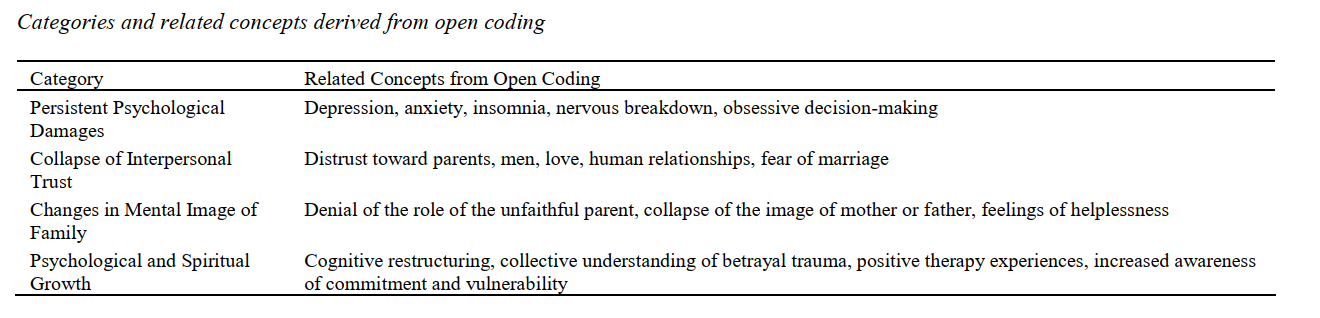
Findings: Analysis revealed four major categories that represent the core phenomenological consequences of parental infidelity for adolescent girls. First, persistent psychological damages were observed, including depression, anxiety, insomnia, nervous breakdown, and obsessive tendencies in decision-making. Second, a collapse of interpersonal trust emerged, characterized by distrust toward parents, men, love, and fear of marriage. Third, changes in the mental image of family were identified, involving denial of the unfaithful parent, collapse of parental authority, and feelings of helplessness. Finally, despite the trauma, some participants reported psychological and spiritual growth, including cognitive restructuring, heightened awareness of commitment, and positive outcomes from therapeutic experiences.
Conclusion: The study highlights that parental infidelity has profound and multifaceted consequences for adolescent girls, encompassing psychological distress, relational insecurity, and identity disruption, yet also carrying the potential for resilience and growth. These findings underscore the need for targeted counseling interventions, culturally sensitive therapeutic support, and preventive education to address the long-term impacts of parental betrayal on adolescents.
Downloads
References
Adawiah, R. (2024). The Divorce Phenomenon in Cenggu Village: Psychological Impact and Childcare Responsibilities. Legitima Jurnal Hukum Keluarga Islam, 6(2), 46-62. https://doi.org/10.33367/legitima.v6i2.4415
Ban, H., Jin, M., & Kim, S. (2022). An Autoethnography on Reflection Experience of Adult Children Who Experienced Father’s Infidelity. Korean Association for Qualitative Inquiry, 8(3), 423-452. https://doi.org/10.30940/jqi.2022.8.3.423
Bandalović, G., Vučica, Z. Š., & Tanfara, M. (2025). Sociological Research of Single Parenthood: Experiences of Divorced Mothers. Issues in Ethnology and Anthropology, 20(1). https://doi.org/10.21301/eap.v20i1.12
Bimenyimana, P. C., Batakariza, I. N., Hakizamungu, A., Ngabonziza, I., & Joseph, H. (2024). Assessing the Effects of Family Conflicts on Children’s Development in Huye District of Rwanda and the Need for Social Work Interventions. JSWDS, 6(3), 39-56. https://doi.org/10.4314/jswds.v6i3.3
Bochon, L., & Bird, B. M. (2022). Hormonal Predictors of Infidelity. 61-85. https://doi.org/10.1093/oxfordhb/9780197502891.013.3
Dagami, J. P., Cadano, M. J. O., Arceño, A. J. M., Atay, M. J. P., Dosal, A. T., & Padullo, C. A. C. (2022). Uncovering the Causes of High Incidence of Parental Separation: A Case in Barangay Zone II, Santa Fe, Leyte. International Journal of Research Publications, 103(1). https://doi.org/10.47119/ijrp1001031620223447
Esan, T. P., & Olaleye, Y. L. (2023). Navigating Wellbeing and Coping: Quantitative Analysis of the Experiences of Teenager of Infidel Parents in Ibadan. Children and Teenagers, 7(1), p1. https://doi.org/10.22158/ct.v7n1p1
Hakimov, K. (2023). Aspects of the Difference Between Premeditated Murder Committed Beyond the Limits of Necessary Defense and in a State of Strong Mental Excitement. Jurisprudence, 3(4), 112-121. https://doi.org/10.51788/tsul.jurisprudence.3.4./kcmh1815
Imtinan, G., Z, S. P. R., Anindya, S., & Malin, A. (2023). The Impact of Infidelity on Children’s Psychological Development. World Psychology, 2(2), 114-130. https://doi.org/10.55849/wp.v2i2.156
Ismail, I. (2021). Impact of Divorce on Character Education of Children (Case Study in Palu Selatan District). Risâlah Jurnal Pendidikan Dan Studi Islam, 7(2), 343-355. https://doi.org/10.31943/jurnal_risalah.v7i2.195
Kaba, K., & Güngör, A. (2024). Dominant Ego States in Relation to Attachment Styles and Infidelity Tendencies. The Family Journal. https://doi.org/10.1177/10664807241231247
Lacker, T. J., Walther, A., Waldvogel, P., & Ehlert, U. (2020). Fatherhood Is Associated With Increased Infidelity and Moderates the Link Between Relationship Satisfaction and Infidelity. Psych, 2(4), 370-384. https://doi.org/10.3390/psych2040027
Maendesa, C., & Hakak, Y. (2022). The Three-Legged Pot and the Lasting Impact of the Gukurahundi: Shona Ndebele Inter-Tribal Families in England. Social Work and Social Welfare, 4(2), 242-251. https://doi.org/10.25082/swsw.2022.02.004
Mahmud, S., Sakdiah, Fatmawati, F., Mashuri, & Furqan, M. (2024). Moral Education in the Family and the Phenomenon of Infidelity. Tafkir Interdisciplinary Journal of Islamic Education, 5(3), 400-413. https://doi.org/10.31538/tijie.v5i3.1111
Marpaung, S. S. M., & Kustiawan, W. (2024). Analysis of the Condition of Children Experienced From Broken Home Families in Janjimatogu Village, Lubuk Barumun District, Padang Lawas District. Sangkép Jurnal Kajian Sosial Keagamaan, 7(3), 488-500. https://doi.org/10.20414/sangkep.v7i3.11704
Movahedrad, F., Alitabar, S. H. S., Mohammadi, A., & Hosseinifard, V. (2023). The Effectiveness of Strength-Based Counseling on the Tendency Toward Marital Infidelity and Self-Compassion of Conflicted Couples. Jarac, 5(2), 8-14. https://doi.org/10.61838/kman.jarac.5.2.2
Mubarok, M. A. (2023). Grandparents in Strengthening Children’s Spiritual Intelligence in Mlaten Village, Mijen District, Demak Regency. Tasamuh Jurnal Studi Islam, 15(2), 261-275. https://doi.org/10.47945/tasamuh.v15i2.1081
Muniroh, F., & Hasanah, M. (2022). Resiliensi Wanita Yang Mengalami Perselingkuhan Dalam Rumah Tangga Di Sarirejo Lamongan. Busyro Jurnal Dakwah Dan Komunikasi Islam, 2(1), 15-22. https://doi.org/10.55352/kpi.v2i1.572
Musyahidah, S., & Rustina. (2023). Respon Kaum Perempuan Dalam Menyikapi Kasus Perceraian Akibat Perselingkuhan Perspektif Hukum Keluarga. Musawa Journal for Gender Studies, 15(1), 60-89. https://doi.org/10.24239/msw.v15i1.2069
Myers, W. C., Lee, E., Montplaisir, R., Lazarou, E. E., Safarik, M., Chan, H. C., & Beauregard, É. (2021). Revenge Filicide: An International Perspective Through 62 Cases. Behavioral Sciences & the Law, 39(2), 205-215. https://doi.org/10.1002/bsl.2505
Obalowu, I. A., & Rahim, A. A. (2022). Marital Infidelity and Paternity Dispute in Nigeria: An Islamic Perspective. Al Hikmah International Journal of Islamic Studies and Human Sciences, 5(5), 1-17. https://doi.org/10.46722/hikmah.v5i5.299
Odebode, A. A., James, J. F., Adegunju, K. A., & Julia, J. (2021). Aftermaths of Infidelity as Expressed by Literate Working Class Women in Lagos State, Nigeria. Journal of Nusantara Studies (JONUS), 6(2), 41-57. https://doi.org/10.24200/jonus.vol6iss2pp41-57
Salih, L., & Chaudry, S. (2021). Exploring the Lived Experience of Parental Infidelity. Journal of Family Studies, 29(1), 407-430. https://doi.org/10.1080/13229400.2021.1956997
Siguan, A., Ong, M. F. T., & CaÑEte, S. I. M. (2021). The Impact of Infidelity on Filipino Family Dynamics and Young Adult Filipino's Self-Concept. Malim Jurnal Pengajian Umum Asia Tenggara (Sea Journal of General Studies), 22(1), 14-37. https://doi.org/10.17576/malim-2021-2201-02
Sulistija, D. W. (2024). Dampak Perceraian Pada Anak Di Gereja Bethel Indonesia Wilayah Jakarta Barat. Jbpakk, 2(4), 243-255. https://doi.org/10.61132/jbpakk.v2i4.784
Suyatno, T., & Vechea, S. (2024). Pre-Marriage Education: Fidelity in Buddhism. Jurnal Pendidikan Sains Sosial Dan Agama, 10(1), 1-12. https://doi.org/10.53565/pssa.v10i1.1167
Syaiful, S. (2022). Forgiveness Terhadap Perselingkuhan Demi Keberlangsungan Pendidikan Anak. Idealita, 2(1), 35-50. https://doi.org/10.62525/10.62525/idealita.2022.v2.i1.35-50
Taheri, E., Didehban, E., Ranjbarmoqadam, A., & Kanaghestani, A. (2024). The Mediating Role of Social-Emotional Loneliness in the Relationship of the Quality of Marital Relationships and Dark Personality Traits With Online Infidelity. Iranian Journal of Psychiatry and Clinical Psychology, 30(1), 0-0. https://doi.org/10.32598/ijpcp.30.5019.1
Thorson, A. R. (2020). Emerging Ideas. Rumination's Mediating Effect on Feeling Caught and Well‐Being After Parental Infidelity. Family Relations, 70(3), 896-904. https://doi.org/10.1111/fare.12509
Downloads
Additional Files
Publication Timeline
- Submitted
- Revised
- Accepted
Issue
Section
License
Copyright (c) 2025 Arezoo Jamshidi kia (Author); Nazanin Honarparvaran (Corresponding Author)

This work is licensed under a Creative Commons Attribution-NonCommercial 4.0 International License.